
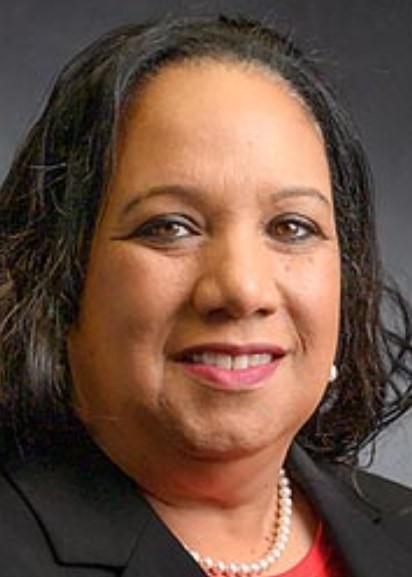
Thomasina O. Coates, 60, of Waldorf
Thomasina O. Coates, 60, of Waldorf, a sitting member of the Charles County Board of Commissioners, has been permanently barred from voting on any matters involving the employment of County Administrator Mark Belton.
The ruling, issued June 30, 2025, by the Appellate Court of Maryland, upholds a permanent injunction initially granted by the Circuit Court for Charles County.
The case centers around workplace misconduct allegations dating back to 2019, when Belton filed a complaint against Coates accusing her of creating a hostile work environment. According to court documents, Belton alleged that Coates sent hostile emails, made public and private disparaging remarks, and fostered a racially biased atmosphere.
An independent investigator, hired by the Board, substantiated the claims, citing “overwhelming” evidence of inappropriate conduct and recommending prompt action to protect the county’s legal and operational interests.
As a result, in June 2020, the Board voted 4-1 to adopt a set of restrictions known as Prompt and Remedial Action (PRA), which prohibited Coates from participating in employment-related decisions concerning Belton, including evaluations and contract discussions. The PRA also required that she communicate through the Board president or vice president instead of contacting Belton directly. That same day, the Board also amended its internal rules to allow employees to report mistreatment by commissioners and to outline disciplinary options.
These actions were not made public at the time and remained confidential for over two years.
In December 2022, shortly after winning re-election, Coates attempted to vote with two other commissioners to terminate Belton’s employment. Commissioners Amanda Stewart and Gilbert Bowling objected, citing the 2020 PRA and arguing that Coates’s vote was invalid. The Board, by unanimous vote excluding Coates, authorized Stewart and Bowling to file a lawsuit seeking judicial clarification of her voting authority.
Following a nine-month legal battle, the court issued a permanent injunction in October 2023, which has now been affirmed on appeal. The injunction prohibits the Board from taking any vote to change or cancel the PRA or the related board rules if Coates participates in that vote.
The appellate court agreed that the PRA was a lawful administrative action by the Board, designed to protect the integrity of the workplace and uphold anti-discrimination policies. The court rejected Coates’s claims that the injunction violated her constitutional rights or that she was wrongfully denied discovery in the case. The court emphasized that Coates never formally challenged the PRA in court or through Board channels during the two years it remained in effect.
Additionally, the court determined that Belton, as a county administrator, is considered an “employee” under federal civil rights law and is entitled to legal protections from discriminatory treatment. The ruling reinforces the Board’s authority to enact internal rules to protect county employees and to restrict commissioner participation in personnel matters when necessary.
The court also vacated a lower court’s dismissal of Coates’s counterclaim that Belton was properly fired in December 2022. However, it did so only to remand the matter so a formal declaratory judgment could be issued affirming that the PRA blocked her from voting in that decision.
This decision concludes a high-profile internal dispute that began with private workplace complaints and grew into a broader legal question about governance, accountability, and the limits of individual authority on a public board.