
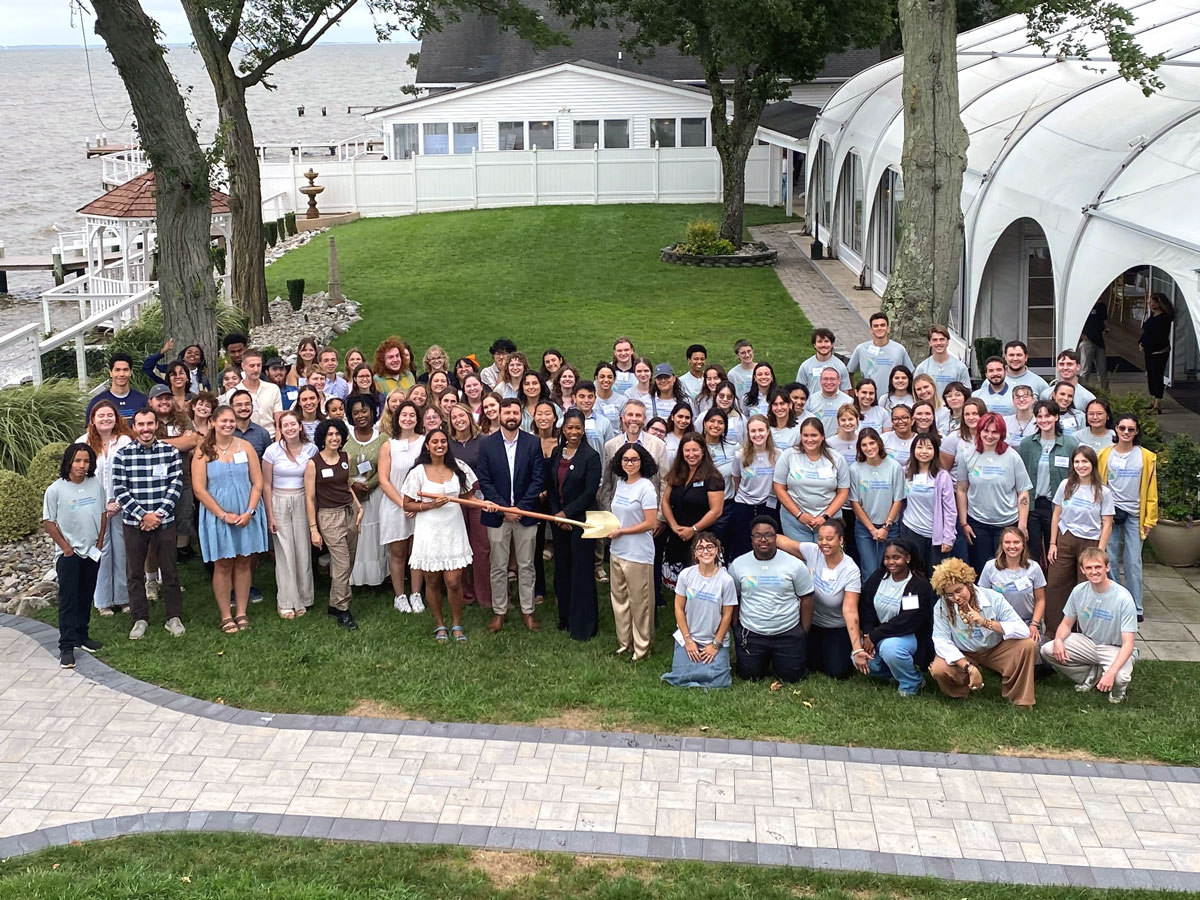
 The Chesapeake Bay Trust (Bay Trust), along with partners State of Maryland, BGE, and others, proudly introduces a new class of 50 Chesapeake Conservation and Climate Corps members working on natural resources issues throughout Maryland.
Today, the new class met their host organizations to learn more about their job responsibilities for the upcoming year.
The Chesapeake Conservation and Climate Corps (the Corps), created by the Maryland General Assembly in 2010 and expanded through the Climate Solutions Now Act of 2022, empowers young people to serve their communities and gain real-world professional skills through a year-long, stipend-supported term of service. Corps members are matched with nonprofit and government host organizations and receive firsthand training on a wide variety of topics in the realms of climate, energy, watershed restoration, agriculture, forestry, and education.
More than 450 alumni of the Chesapeake Conservation and Climate Corps have become leaders in the environmental movement as well as engaged individuals in other fields bringing a stewardship ethic to their communities. An unintended benefit, many alumni are hired by their host organizations following their year of service because their hosts find them so valuable, expanding the organizations’ capacity.
“The Chesapeake Conservation and Climate Corps is more than a program, it’s an investment in Maryland’s future,” said Maryland Secretary of the Environment Serena McIlwain. “It empowers the next generation to lead on climate action, protects our treasured natural resources, and opens doors to meaningful careers that strengthen our economy. By developing skilled environmental leaders, we are building a cleaner, more resilient Maryland where both people and communities can thrive.”
During their terms of service, Corps participants collaborate directly with their host organizations to gain valuable on-the-job experience as they work to advance environmental conservation, K-12 education, sustainable agriculture practices, clean and renewable energy technologies, energy efficiency programs and other climate resiliency goals, climate adaptation activities specifically in communities disproportionally affected by climate impacts, and much more. In addition to this real-world experience, Corps members receive professional development and service-learning opportunities including grant writing and project management.
“Protecting Maryland’s waterways, wildlife, and green spaces requires a collaborative effort between government, local organizations and all of our communities who depend on healthy natural resources,” said Secretary of the Maryland Department of Natural Resources Josh Kurtz. “This program is equipping the next generation of environmental leaders to promote the health and sustainability of our entire State.”
This year, the Bay Trust and the Maryland Department of Service and Civic Innovation (DSCI) further expand their collaboration and coordination between the 12-month Chesapeake Conservation and Climate Corps program and the 9.5-month Service Year Option program. Together, these efforts will support nearly 100 young adults who will dedicate their service to advancing climate solutions, conservation, and community resilience across the state.
“DSCI is proud to partner with the Chesapeake Bay Trust to expand career- and character-building opportunities for young Marylanders in the growing climate and conservation fields,” said Maryland Department of Service and Civic Innovation Secretary Paul Monteiro. “Together, we are strengthening communities and advancing Governor Moore’s vision of expanding service pathways for every young person across the state.”
Funds for the Corps are provided by the State of Maryland, the Chesapeake Bay Trust (supported by the Chesapeake & Coastal Bays vehicular license plate program (the “bays plate”), a state income tax checkoff, and other sources), the Maryland Department of Natural Resources, Maryland Department of Service and Civic Innovation, and BGE.
“BGE is proud to recognize this 16th class, which joins hundreds of Corps alumni doing critical work to ensure our communities are healthy and resilient,” said Valencia McClure, Senior Vice President of Governmental, Regulatory and External Affairs for BGE, which has been supporting the program since its inception in 2010. “Thanks to the Corps, these young professionals enter the workforce ready for action and committed to advancing sustainable practices across Maryland.”
The 2025-26 Chesapeake Conservation and Climate Corps participants will serve this year in Allegany County, Anne Arundel County, Baltimore City, Baltimore County, Frederick County, Howard County, Montgomery County, Prince George’s County, Talbot County, and Washington County.
“The Corps empowers lifelong stewards of our natural resources,” said Dr. Jana Davis, president of the Chesapeake Bay Trust. “These young people graduate with the skills, professional network, and hands-on experience to propel their careers and have a lasting impact on our communities, whether they choose to stay in the environmental field or bring their environmental stewardship ethic to other fields. We need green everywhere!”
About the Chesapeake Bay Trust: The Chesapeake Bay Trust (www.cbtrust.org) envisions a restored, protected, and resilient Chesapeake Bay watershed and other natural resources in our area, from the Coastal Bays to the Chesapeake to the Youghiogheny River. The Bay Trust empowers about 400 local community-based groups each year with the resources they need to take on a meaningful and measurable role in restoring forests, streams, rivers, bays, wildlife, and more in their own communities. The Bay Trust is supported by the sale of the Chesapeake & Coastal Bay license plate; donations to the Chesapeake Bay and Endangered Species Fund on the Maryland State income tax form; donations made by hunters, fishers, and boaters in the Maryland online natural resource licensing system; donations from individuals and corporations; and partnerships with private foundations and federal, state, and local governments. The Bay Trust has received the highest rating from Charity Navigator for over two decades. On average, 90 cents of every dollar are directed to the Bay Trust’s restoration and education programs.