
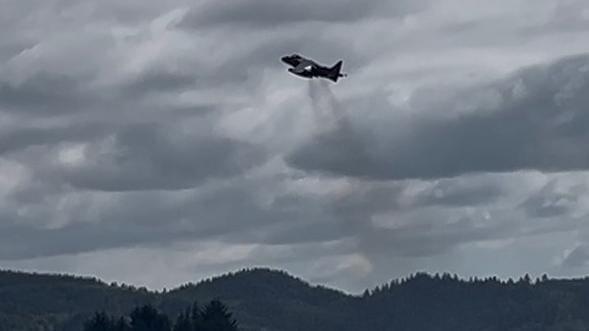
AV-8B Harrier takes off following a hoover demonstration of the AV-8B Harrier at the Tillamook Air Museum in Oregon.
NAVAL AIR SYSTEMS COMMAND, Patuxent River, Maryland: In a powerful tribute to Marine Corps aviation history, Air Test and Evaluation Squadron (VX) 31 delivered two AV-8B Harrier II+ aircraft to aviation museums on the West Coast, in July and August, marking the end of their operational service and the beginning of their legacy as public exhibits.
Castle Air Museum
On July 14, 2025, AV-8B Harrier II+ Bureau Number (BuNo) 165579 touched down at Merced-Castle Airport in Atwater, California, after completing its impressive vertical/short takeoff and landing (V/STOL) capability by pilot retired Lt. Col. James “Jimbo” Coppersmith, drawing attention from aviation enthusiasts and local media alike.
The aircraft was demilitarized by VX-31’s maintenance crew and towed to its destination at Castle Air Museum, July 17.
This Harrier holds a rare dual distinction; it served as a fleet aircraft with 791 combat hours and later transitioned to a test platform at VX-31 supporting flight testing at Naval Air Weapons Station China Lake, California.
“The arrival of this jump jet is a proud moment for Castle,” said Castle Air Museum chairman and retired U.S. Air Force Maj. Gen. Clay Garrison. “Its combat pedigree and test history make it a unique addition to our collection and we’re honored to preserve its story for future generations.”
Tillamook Air Museum
Just weeks later, a second AV-8B Harrier II+, BuNo 165002, landed at Tillamook Airport in Oregon Aug. 4, 2025. The aircraft had been demilitarized July 7 and was transferred to the Tillamook Air Museum, housed in the historic World War II-era Hangar B, one of the largest wooden structures in the world.
Originally delivered to the Marine Corps on March 30, 1995, BuNo 165002 amassed 5,518 total flight hours, including 631 combat hours across multiple deployments. Its operational history spans missions in Iraq and Syria under Operation Inherent Resolve, as well as shipboard deployments aboard USS Peleliu, USS Nassau and USS America.
“The Harrier II+ represents an extraordinary chapter in modern military aviation,” said Christian Gurling, Tillamook Air Museum curator. “We are proud to accept this historic piece of Marine Corps history.”
“The arrival of a combat-tested Harrier flown directly from China Lake is a momentous occasion and one of the most significant acquisitions in the museum’s history,” said Rita Welch, Tillamook Air Museum director. “This aircraft greatly enhances our collection and strengthens our ability to educate the public about military aviation.”
VX-31: A Legacy of Excellence
VX-31’s role in preparing and delivering these aircraft underscores the squadron’s commitment to preserving naval aviation heritage.
“Their meticulous demilitarization efforts ensured both aircraft were safely transitioned from active service to museum display, maintaining historical integrity while meeting public safety standards,” said Pablo “Louie” Sanchez, the AV-8B Product Support Manager and Harrier museum task force lead.
Sam Hotz, AV-8B Harrier Program Office (PMA-257) deputy program manager, added, “These deliveries mark a significant milestone in the lifecycle of the AV-8B Harrier II+, a storied aircraft known for its V/STOL capabilities and its vital role in Marine Corps operations over the past three decades.”