
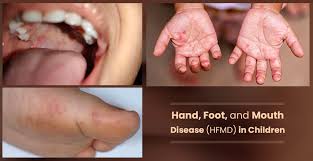
 Ongoing reports of illness to the St. Mary’s County Health Department (SMCHD) have shown a significant increase in hand, foot, and mouth disease (HFMD) and associated outbreaks in the county.
SMCHD advises community members to practice preventative measures, especially families with young children in child care facilities and schools. Adults can also be affected by HFMD.
HFMD is commonly caused by different viruses in the Enterovirus classification. Symptoms of HFMD often appear like a common cold with a rash, such as painful sores that blister, especially in the mouth, on the fingers/hands, and/or on the feet.
Most children who experience illness have mild symptoms for 7 to 10 days, but the virus can still be spread for several weeks after illness. Serious complications from HFMD are rare.
Though HFMD spreads mostly in the summer and fall in the United States, it can still occur any time of year. It can spread quickly at schools and child care centers. You can get HFMD from:
- Contact with droplets that have virus particles after a sick person coughs, sneezes, or talks.
- Touching an infected person or making other close contact, like kissing, hugging, or sharing cups or eating utensils.
- Touching an infected person’s stool, such as by changing diapers, then touching your eyes, nose, or mouth.
- Touching objects and surfaces that have the virus on them, like doorknobs or toys, then touching your eyes, nose, or mouth.
HFMD can spread easily. To help prevent and control the spread of HFMD, it is recommended to:
- Wash your hands often with soap and water for at least 20 seconds, especially after changing diapers, using the toilet, and coughing, sneezing, or blowing your nose.
- Help children wash their hands and keep blisters clean.
- Avoid touching your face with unwashed hands, especially your eyes, nose, and mouth.
- Clean and disinfect frequently touched surfaces and shared items, including toys and other objects that may have saliva on them.
HFMD can usually be treated at home with over-the-counter medications to relieve fever and pain caused by mouth sores.
Children can return to child care and school as long as they:
- Are fever free without the use of fever reducing medications for at least 24 hours
- Feel well enough to participate in class and activities
- Do not have uncontrolled drooling from mouth sores. Sores on the body must be covered and no longer draining.
If your child is sick or you’re unsure when it’s appropriate for your child to return, talk with your child’s healthcare provider and school or child care facility.
For more information, visit smchd.org/hfmd.