
 Potomac Riverkeeper Network -Washington, DC – January 26 – Potomac Riverkeeper Network (PRKN) today released the results of its testing of contaminated water from the Lockhouse 10 sewage spill along the Potomac and the data show a far worse impact than originally contemplated, PRKN President Betsy Nicholas announced today.
Nicholas said, “These measurements of E.coli bacteria show contamination which is nearly 12,000 times what authorities limit for human contact. And so far, almost 300 million gallons have entered the Potomac River. The long term impact cannot be overstated. We measured against the standards established by Virginia’s Department of Environmental Quality and Maryland’s Department of the Environment. We were able to get this information thanks to the real-time testing done on Friday, January 23 by Dean Naujoks, Potomac Riverkeeper, and Evan Quinter, PRKN Volunteer Coordinator on Friday.”
Naujoks elaborated: “We sampled the sewage discharging from the broken interceptor pipe to the Potomac River near Cabin John at Lock 10 and the result was 4,884,000 MPN – Most Probable Number for E.coli – which is 11,900 times higher than the 410 MPN limit for safe human contact.
Very nearby, samples collected from the river at the Lock House 10 public river access where people recreate showed values were 7,000 times above the 410 limit. We also sampled roughly four miles downstream in DC waters at Fletchers Cove, where testing data revealed E.coli levels were 60 times higher than the 410 standard. As a baseline, we sampled upstream from the sewage spill at Old Angler’s Inn, where we measured 4.1 MPN for E.coli – ensuring river water upstream from the spill is safe and clean for human contact.”
Naujoks continued, “Infrastructure failure is at the root of this disaster – the six foot diameter sewage interceptor pipe located this close to the river should have been better maintained in order to avoid this catastrophe. DC Water needs to come up with a better plan than using a one hundred year old dry canal ditch to capture and contain future sewage releases instead of discharging hundreds of millions of gallons of sewage to the river! One of the largest sewage spills in US history could have been avoided.”
E.coli is a bacterium found in mammalian intestines, including humans and is used as an indicator of water quality and pollution levels, as it comes from sewage discharges, stormwater runoff, and agricultural pollution sources. It also indicates a host of nasty contaminants: fecal matter, sewage, water-borne illnesses, pathogens, harmful bacteria and parasites. Some E.coli strains cause gastrointestinal complications, disease, kidney and nervous system issues, and in the most severe cases, permanent damage. MPN (Most Probable Number) for E. coli refers to a statistical method used in water and food testing to estimate the quantity of E.coli (a fecal indicator bacteria) in a sample, utilizing UV light often used for E. coli confirmation, indicating fecal contamination. It’s a key indicator of sanitation, with results expressed as MPN per volume (e.g., 100 mL) to assess drinking water safety or shellfish quality.
Naujoks concluded, “Our sample data collected right at the sewage outflow revealed shockingly high numbers that could have long term impacts to water quality. The vile and putrid smell from the torrent of sewage discharging to the Potomac River for eight straight days is one of the most disturbing things I have ever seen in 25 years as a Riverkeeper. We are glad the flow of sewage has been reduced but the potential health risks at this level and the long-term impacts to the river are hard to imagine. We have seen no response from public health agencies to determine whether this type of raw sewage will impact public health and the environment. Raw sewage is not only harmful to humans, but it can also harm the environment through excessive nutrients, toxic contaminants, and disease exposure. This can lead to dead zones in the river, harmful algal blooms, and fish kills.”
About Potomac Riverkeeper Network: Potomac Riverkeeper Network is a registered 501(c)(3) non-profit organization with three regional Waterkeeper branches: Potomac Riverkeeper, Upper Potomac Riverkeeper, and Shenandoah Riverkeeper. PRKN’s mission is to protect the right to clean water for all communities and all those who live in and rely upon the Potomac and Shenandoah watersheds by stopping pollution, making drinking water safe, protecting healthy river habitats, and enhancing use and enjoyment for all.
Maryland Department of Natural Resources released the following statement this morning.
ATTN. HUNTERS (especially those who hunt with dogs): On January 19 a major sewer line along Clara Barton Parkway in Montgomery County collapsed, the wastewater is now entering the Potomac River and the C&O Canal in the area while repair work is underway.
The public is advised to avoid any contact with the wastewater.
Untreated sewage can contain many pathogens causing a variety of illnesses ranging from E. coli to hepatitis. Contact with untreated overflow may cause people to get sick and could bring these pathogens into homes. Additionally, take precautions if waterfowl hunting with a dog. It is best to leave your dog at home to avoid potential exposure.
For additional information please go to the DCWater.com website.
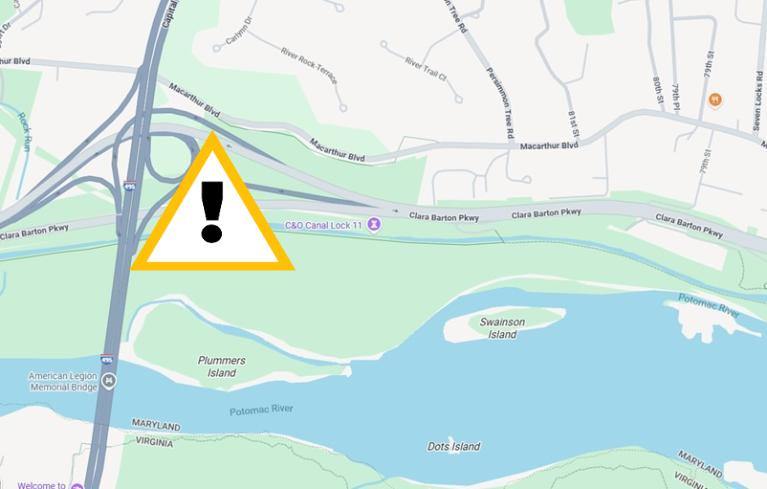
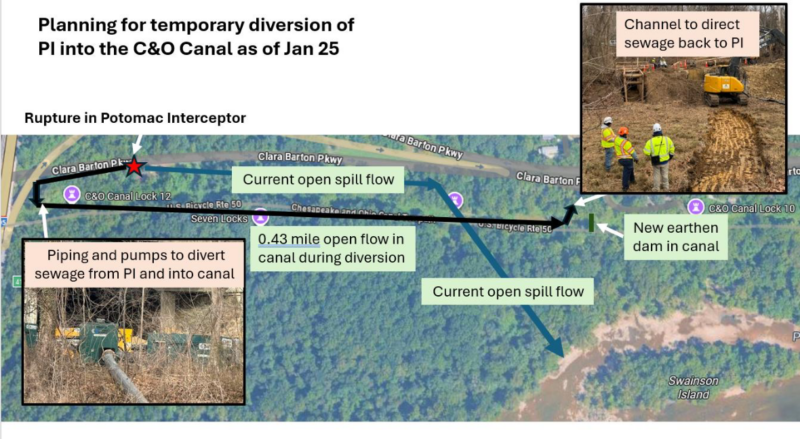
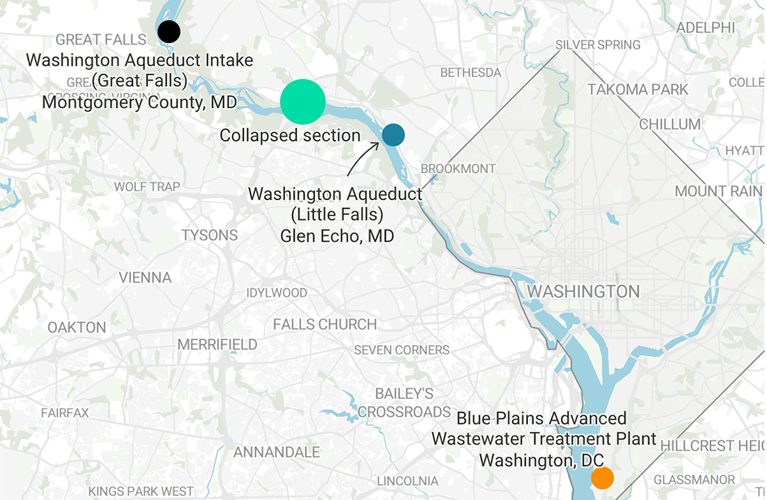
This map shows the location of a collapsed pipe that began sending raw sewage into the Potomac River on Jan. 19, 2026. (Courtesy of DC Water)