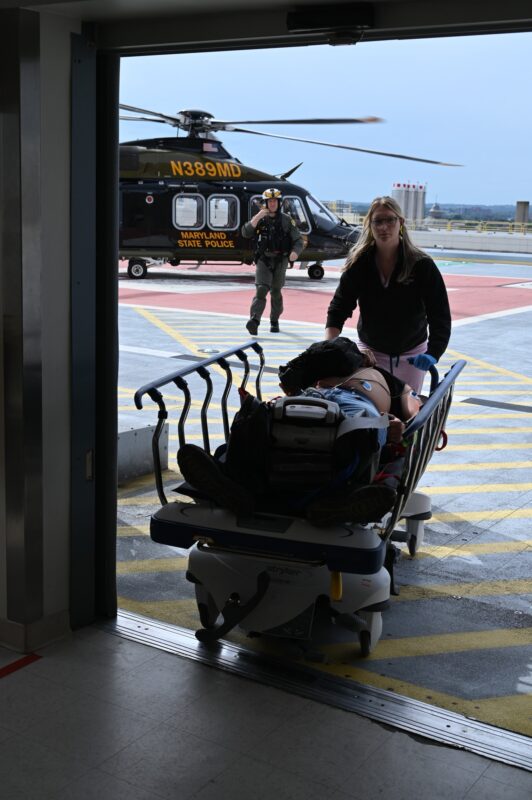
 A major homeland security drill brought together more than 375 federal, state, and local officials, along with medical professionals, for a full-scale mass casualty exercise known as Operation Harbor Shield. The event was designed to test emergency preparedness, coordination, and response plans under the pressure of high-risk, multi-agency scenarios.
The exercise, coordinated by U.S. Customs and Border Protection (CBP), the University of Maryland Medical Center (UMMC), and the U.S. Air Force Center for the Sustainment of Trauma and Readiness Skills (C-STARS) Baltimore, simulated simultaneous attacks in two separate locations.
The first scenario involved an active shooter inside a seaport building, while the second combined an active shooter with a drone-deployed improvised explosive device (IED) at a concert venue. Both scenarios tested law enforcement, first responders, and medical teams in their ability to neutralize threats, coordinate effectively, and treat a sudden influx of casualties.
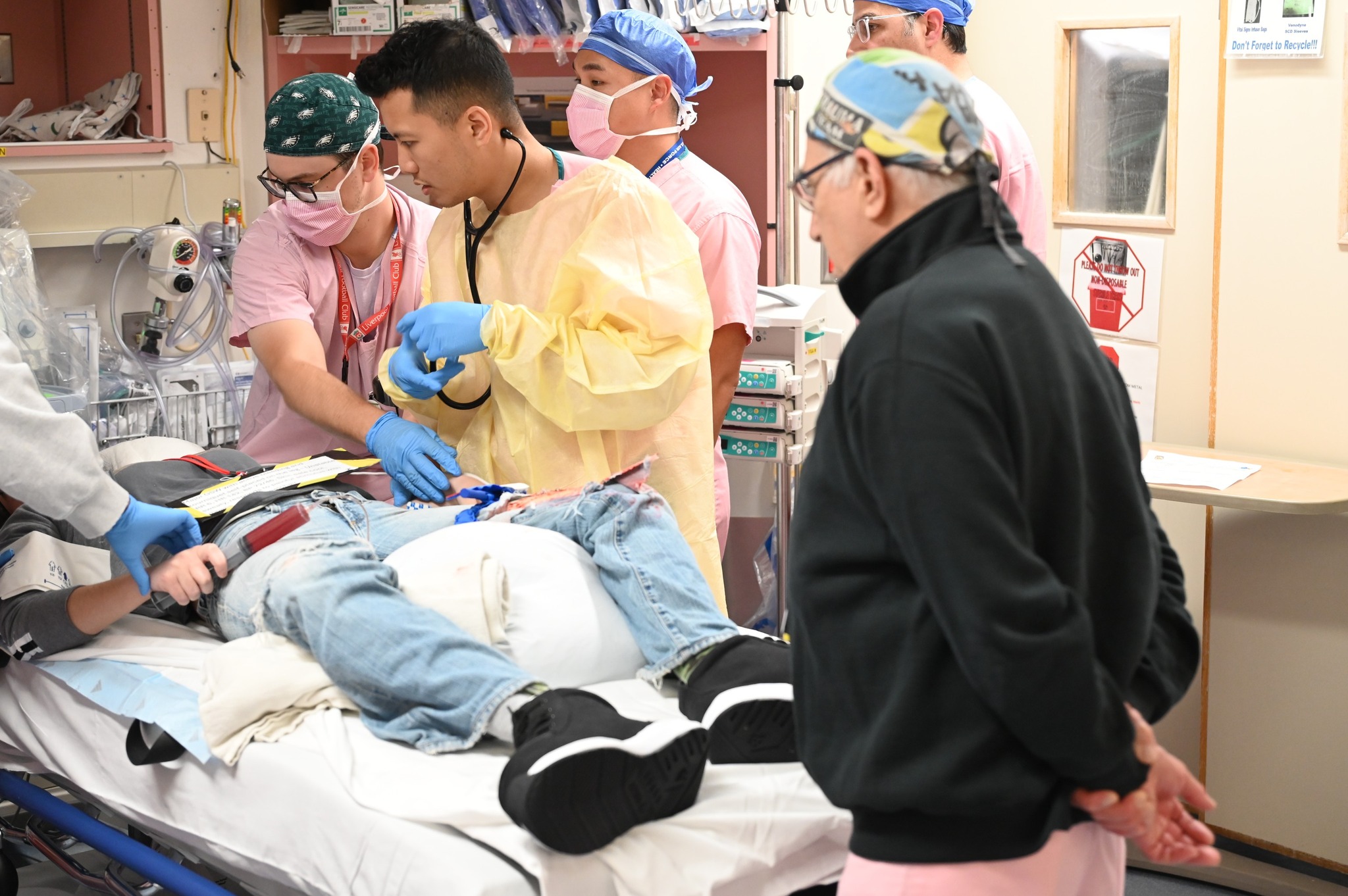
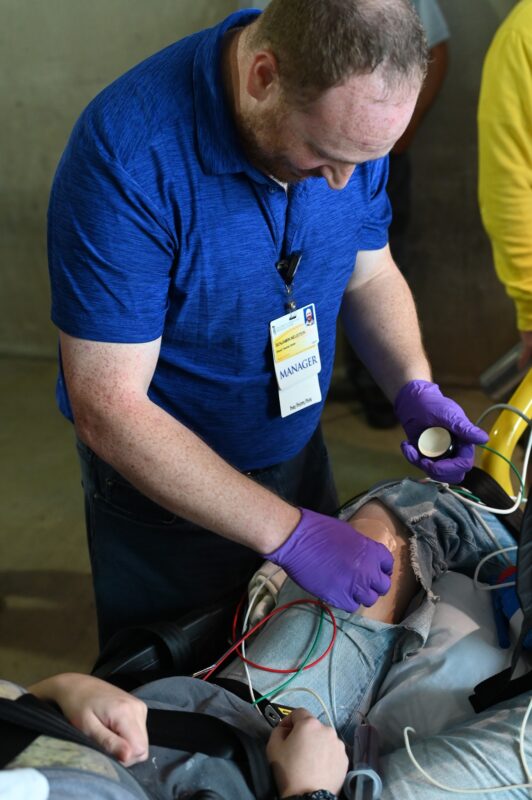
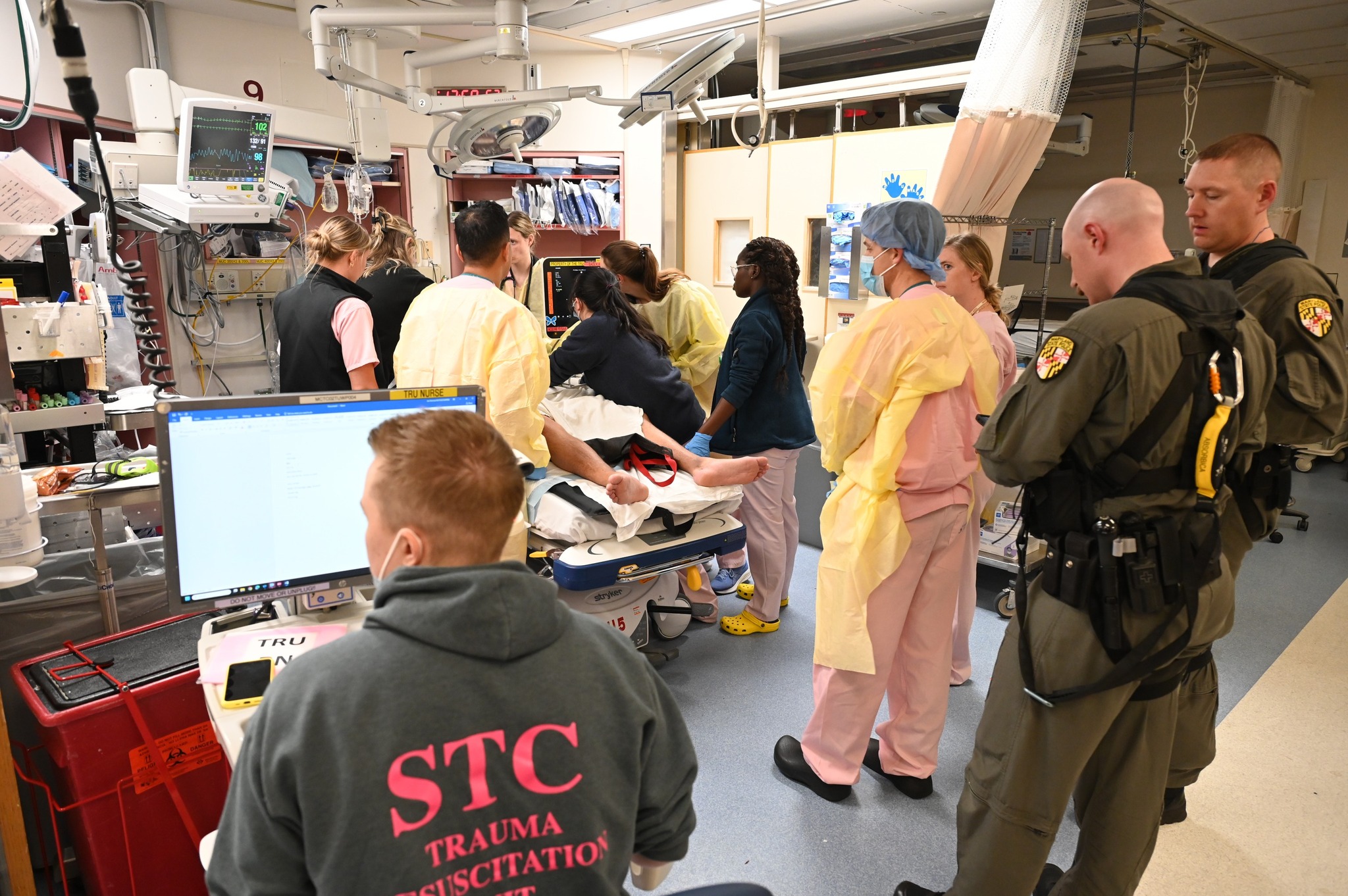
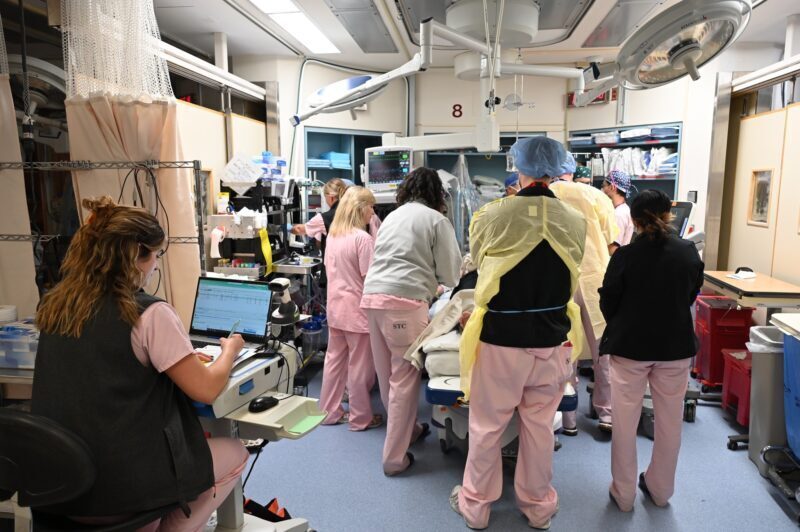
At the center of the medical response was the R Adams Cowley Shock Trauma Center at UMMC, which received 11 simulated patients during the exercise. Six arrived via the University of Maryland ExpressCare Critical Care Transport units, while five were delivered by two Maryland State Police medevac helicopters that touched down within minutes of each other.
Inside Shock Trauma’s Trauma Resuscitation Unit, staff managed the arrivals under real-time conditions, reinforcing the hospital’s capacity to handle mass casualty surges.
The drill also highlighted the military’s partnership in civilian emergency readiness. The Shock Trauma Center hosts the nation’s largest C-STARS program, where Air Force physicians, nurses, surgical technicians, and special operations medics are trained in advanced trauma care. In Operation Harbor Shield, 115 C-STARS and Shock Trauma staff participated, demonstrating the shared mission of preparing both civilian and military responders for large-scale emergencies.
A wide range of agencies contributed to the operation, including CBP, the Bureau of Alcohol, Tobacco, Firearms and Explosives (ATF), Maryland State Police, Maryland Transportation Authority Police, Baltimore County Police, Baltimore County Fire, and Baltimore City Police.
CBP officials said the primary objective was to identify gaps in communication, interoperability, equipment, and surge capacity. By exposing weaknesses in a controlled environment, leaders hope to strengthen coordination and readiness for real-world disasters that demand rapid, unified action.
Operation Harbor Shield reinforced Maryland’s role as both a testing ground and training hub for homeland security preparedness. With Shock Trauma at the center, the exercise underscored the critical need for cooperation across federal, state, local, and medical systems when lives are on the line.
All photos are courtesy of the University of Maryland Medical Center.