
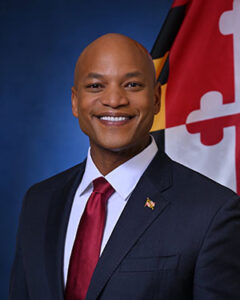
 Governor Wes Moore today announced a historic $10.2 billion investment in Maryland’s K-12 education as part of his Fiscal Year 2027 budget proposal. The announcement, made at Frederick High School, reinforces the Moore-Miller Administration’s commitment to building a world-class education system that eliminates achievement gaps and prepares every student for the jobs of the future.
“Maryland has the talent and the drive to have the best schools in the country, but that requires more than just high standards—it requires us to continue making historic investments,” said Gov. Moore. “Our administration will keep investing in our educators, strengthening our community schools, and modernizing the places where our students learn—ensuring that opportunity reaches every ZIP code and that every Maryland student has the tools to succeed.”
The $10.2 billion allocation reflects a $373.8 million increase over FY 2026 and represents a nearly 17% increase in overall K-12 funding since the start of the Moore-Miller Administration. Under the proposal, per-pupil funding will grow to $11,811, ensuring local school systems have the resources necessary to meet the standards set by the Blueprint for Maryland’s Future.
Key statewide highlights of the FY 2027 education budget include:
- K-12 Aid: To bolster Maryland’s school systems, the governor’s budget provides $228 million in K-12 aid above statutory formulas. This investment compensates for a statute lapse that would have inadvertently reduced the count of students eligible for compensatory education funding in education aid calculations.
- Academic Excellence Program: $10.9 million to launch the new Academic Excellence Program, supporting literacy and math coaches in public schools. The initiative uses an evidence-based approach to provide direct, in-classroom support to teachers, boosting student achievement while improving educator retention.
- Capital Investment: $480.5 million in state funding for school construction to modernize aging facilities and expand capacity. This includes $80 million for the Supplemental Capital Grant Program, which targets fast-growing counties experiencing significant overcrowding.
- Teacher Pipeline and Retention: $19.4 million for the “Grow Your Own” program that helps staff who already work in schools become full-time, licensed teachers in the communities where they live and work with a debt free pathway to licensure. This builds on the administration’s work that has already helped reduce the state’s teacher vacancy rate by half since the beginning of the administration.
- Community Schools: Record funding of $572 million for the Concentration of Poverty grant program, a 16% increase from FY 2026. More than half of Maryland’s schools are community schools. This funding allows schools to provide wraparound services and hire a community school coordinator who works to meet the unique needs of each school community.
The Moore-Miller Administration’s sustained focus on public education has already yielded results across the state, such as improved national math and reading scores, and notable progress in fourth-grade reading. Since taking office, the administration has also cut statewide teacher vacancies in half through initiatives like the expanded $19 million Grow-Your-Own grant program, the launch of the “Feds to Eds” initiative for federal workers impacted by Trump Administration layoffs and firings, and the Registered Teacher Apprenticeship Program—Maryland’s first state-sponsored registered apprenticeship program for teaching.
“This historic investment underscores our shared commitment to ensuring every Maryland student has access to a world-class education,” said State Superintendent of Schools Dr. Carey M. Wright. “By prioritizing instructional coaching for teachers, modern facilities, and evidence-based programs, we are laying the foundation for academic excellence and equity across the state. These funds will help us close achievement gaps and prepare our students for success in college, careers, and life.”
While the budget sets a statewide vision, Governor Moore made today’s announcement at Frederick High School to highlight how these funds address local challenges. Frederick County, the fastest-growing jurisdiction in Maryland, will receive $28 million in total state school construction funding in FY 2027 to help alleviate school overcrowding.
“Meeting the needs of our students takes investment and collaboration at all levels of government, and Governor Moore has been a steadfast partner,” said Frederick County Executive Jessica Fitzwater. “Because of our consistent investment in school construction and strong working relationship with FCPS, Frederick County is building schools faster than any other jurisdiction—saving taxpayers dollars and bringing relief to our overcrowded classrooms and aging schools.”
“As a member of the Senate’s Budget & Tax Committee, I am intimately aware of the budget challenges that we face for fiscal 2027,” said Senator Karen Lewis Young. “Nevertheless, I commend the Governor for supporting our shared values to leave no child behind. His proposed record funding in K-12 education, as well as an increase in per pupil funding, will help to secure a promising future for our children and our economy. In addition, I appreciate that the Governor has recognized Frederick’s rapid growth by proposing investments in school construction for aging facilities and expanded capacity in targeted jurisdictions.”
During the visit, the governor toured the Linking Youth to New Experiences—also known as LYNX—Learning Lab at Frederick High School. The LYNX program, which receives $236,000 from the governor’s proposed budget, serves as a model for the state by providing students with individualized success plans and flexible scheduling through partnerships with community businesses.
“Frederick County Public Schools is a strong and thriving system because of the meaningful partnerships we have cultivated across our community, locally and at the state level,” said Frederick County Public Schools Superintendent Dr. Cheryl Dyson. “Governor Moore’s commitment to invest in school construction and broader educational funding reflects a shared commitment to high-quality learning environments and thoughtful planning for our students now and in the future. We are grateful for the Governor’s partnership and his ongoing support of our schools.”