
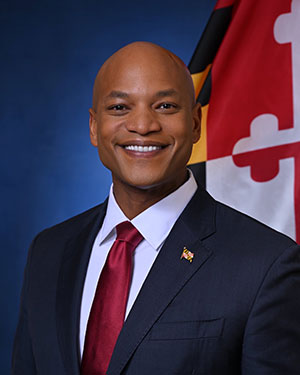
 Governor Wes Moore today announced that the United States Department of Commerce’s National Telecommunications and Information Administration has approved Maryland’s Broadband Equity, Access, and Deployment (BEAD) plan.
The approval enables the State to access $79.1 million in federal funding to support the Maryland Department of Housing and Community Development’s Connect Maryland initiative to provide all Marylanders with affordable and equitable access to high-speed internet.
“Since 2023, we have connected more than 43,000 homes, representing more than 110,000 Marylanders, to high-speed internet—from Western Maryland to the Eastern Shore and everywhere in between,” said Gov. Moore. “This latest federal funding will help connect the last remaining unserved locations to high-speed internet to ensure every Marylander has access to pathways for work, wages and wealth.”
To date, 99.5% of Maryland is connected to or has been awarded funding for high-speed, reliable internet. The latest round of funding will address the remaining 0.5%, accounting for about 9,000 unserved and underserved locations spread across 18 counties.
With the plan’s approval, all remaining locations across 18 counties have now reached fully awarded funding status. The Maryland Department of Housing and Community Development also created the Maryland Broadband Completion map to track the status of the build-out, with all counties now noted as 100% fully funded. Each county will turn green on the map as they make progress toward 100% high-speed internet connection.
The Broadband Equity, Access, and Deployment plan outlines how the Maryland Department of Housing and Community Development’s Office of Statewide Broadband will transparently and efficiently deploy federal funds to bolster the Connect Maryland initiative’s infrastructure, affordability, and outreach goals by:
- Bridging the digital divide with specific strategies to address accessibility gaps in rural and underserved areas.
- Encouraging economic development, innovation, and resilience by enhancing connectivity for businesses—particularly small and medium-sized enterprises.
- Enhancing education and workforce development to help students and workers succeed in a digital environment where remote learning and online job training are increasingly prevalent.
- Supporting public health and safety by improving connectivity for emergency response systems and communications, as well as expanding access to telehealth services.
- Engaging residents and stakeholders in the planning and implementation process to build trust and ensure sustainable progress that meets the unique challenges of different regions and communities.
“The approval from the National Telecommunications and Information Administration marks the final phase of Maryland’s broadband deployment,” said Maryland Department of Housing and Community Development Secretary Jake Day. “We are shifting to the implementation phase, and looking forward to 100% build out across the state to connect every Marylander by 2030.”
The Department’s Office of Statewide Broadband works to ensure that all Maryland households have access to broadband through its programs to expand infrastructure and increase digital equity. Since the office was created in 2017, it has invested more than $270 million into broadband infrastructure and programs. Those efforts have provided high-speed internet access to more than 180,000 previously unserved homes and businesses statewide.
For more information about Connect Maryland, BEAD, and other initiatives, visit dhcd.maryland.gov/Broadband.