
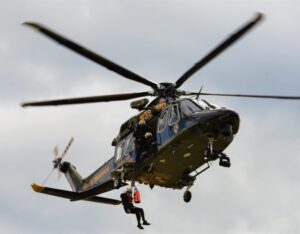
UPDATE 6:49 P.M.: All three patients in the care of EMS with warming blankets and awaiting further evaluation.
Trooper 7 returned to their hangar for fuel.
Updates will be provided when they become available.
The residence and water in question is McIntosh Run, which is a waterway that feeds into Breton Bay and is part of the Port of Leonardtown Park kayak/canoe launch area — it’s open water that can freeze in winter but conditions vary widely and can be very unpredictable
UPDATE @ 6:30 P.M.: All three victims have been removed from the water and ice. EMS personnel report that all patients are conscious and alert, and are currently receiving medical care with warming efforts ongoing.
On Thursday, February 5, 2026, at approximately 6:06 p.m., police, firefighters and emergency medical services responded to the 40000 block of Sandpiper Lane in Leonardtown, for the inland water rescue.
911 callers reported a 17-year old had fallen through ice to the rear of the address provided in the woods.
Deputies from the St. Mary’s County Sheriff’s Office, along with Troopers from the Maryland State Police Aviation Command responded with 911 callers now reporting there were two or three victims in the water.
Maryland State Police Aviation Command Trooper 7 was responding back to their hangar in St. Mary’s County from Salisbury, when they heard the call and rerouted to respond and assist.
The incident is still ongoing with rescue attempts being made, Trooper 7 is preparing for a hoist rescue if needed.
Ice Safety
Ice thickness is unpredictable
-
Ice does not freeze evenly. Currents, springs, wind, snow cover, and underwater objects create weak spots.
-
One area can support weight while a few feet away is dangerously thin.
Freezing temperatures don’t guarantee strength
-
Ice needs time, not just cold, to thicken.
-
A few cold nights after warmer weather often produce surface ice that looks solid but isn’t.
-
Daytime sun, even in winter, weakens ice from the top down.
Snow makes ice more dangerous
-
Snow insulates ice, slowing freezing underneath.
-
It hides cracks, holes, and thin areas.
-
Snow-covered ice gives a false sense of security.
Water movement weakens ice
Ice is thinner near:
-
Bridges and docks
-
Inlets and outlets
-
Streams and rivers
-
Springs and drainage pipes
Flowing water constantly erodes ice from below.
Falls and break-throughs are often fatal
-
Cold shock can cause instant gasping and loss of breath control.
-
Muscle function drops rapidly in icy water.
-
Hypothermia sets in fast, often within minutes.
-
Self-rescue is difficult without tools or training.
“Safe ice” standards are strict
General guidelines (not guarantees):
-
4 inches: walking or ice fishing
-
5–7 inches: snowmobiles
-
8–12 inches: small vehicles
Many drownings happen on ice thicker than people expect, but thinner than required.
Rescue is extremely dangerous
-
Most ice rescues result in multiple victims.
-
Emergency responders are trained and equipped—bystanders usually are not.
Bottom line
Ice can fail without warning, even in sustained freezing weather. If you can’t confirm ice thickness across the entire area, stay off it. No photo, shortcut, or winter activity is worth the risk.