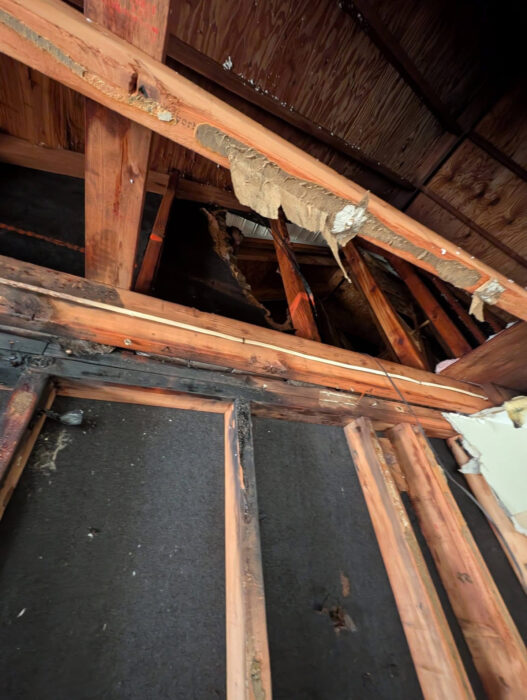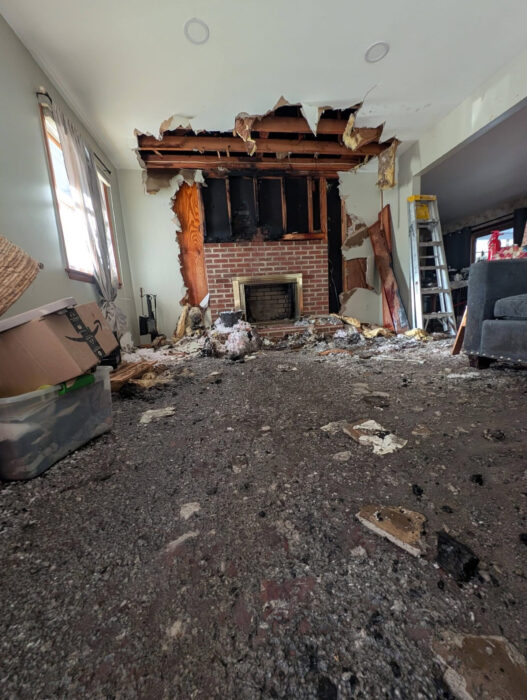
 On Friday, February 6, 2026, at approximately 6:40 a.m., firefighters from Huntingtown Volunteer Fire Department and surrounding departments responded to the 6000 block of Jupiter Drive in Huntingtown, for the reported chimney fire.
Crews arrived on the scene to find nothing evident and began investigating.
During the investigation, crews located a fire within the walls near the chimney which had extended into the attic.
Firefighters quickly extinguished the fire and completed overhaul operations with crews operating on the scene for one hour.
Fortunately, all occupants, including pets, safely evacuated the home with no injuries reported. There were also no injuries to fire personnel.
Photos courtesy of the Huntingtown Volunteer Fire Department.
Chimney fires are more common in winter and more dangerous than many homeowners realize. They can burn fast, spread into the walls or attic, and cause serious structural damage—or total loss—before fire crews arrive.
Why Chimney Fires Happen
The main cause is creosote buildup. Creosote is a highly flammable residue that forms when wood burns. It sticks to the inside of the chimney and thickens over time.
- Other contributing factors:
- Burning unseasoned or wet wood
- Poor airflow or blocked flues
- Infrequent chimney cleaning
- Older or damaged chimney liners
- Once creosote ignites, temperatures inside the chimney can exceed 2,000°F.
Warning Signs of a Chimney Fire – Some chimney fires are loud and obvious; others are slow and hidden.
Common signs include:
- Loud cracking or popping sounds
- A roaring or freight-train noise
- Dense smoke from the chimney
- Flames or sparks shooting out of the chimney
- Strong, hot smell coming from the fireplace
- Even a small or “contained” chimney fire can weaken the chimney and make the next one far worse.
Why Chimney Fires Are Especially Dangerous in Winter
- Homes are sealed tighter, trapping smoke and carbon monoxide
- Fireplaces and wood stoves are used more often
- Cold temperatures make fires burn hotter and longer
- Ice and snow can delay fire department access
- Many house fires in winter start inside the chimney and spread unseen into walls or attics.
How to Prevent Chimney Fires
- Annual Chimney Cleaning
- Have chimneys inspected and cleaned at least once a year
- Heavy fireplace users may need cleaning mid-season
- Cleaning removes creosote before it becomes a fire hazard
- Burn the Right Wood
- Use seasoned hardwood only (dried at least 6–12 months)
Never burn:
- Trash or cardboard
- Treated or painted wood
- Pine or softwoods in excess
- Wet wood creates more creosote and smoke
Improve Airflow
- Make sure the damper opens fully
- Keep the flue clear of debris, nests, and animals
- Consider a chimney cap to block rain and animals
Control Fire Size
- Avoid large, roaring fires
- Don’t overload the fireplace or wood stove
- Let fires burn hot briefly, but not continuously
Install Safety Devices
- Smoke detectors on every level of the home
- Carbon monoxide detectors near sleeping areas
- Keep a fire extinguisher nearby—but never use water on a chimney fire
Never use water on a chimney fire, as the sudden steam generation can cause the flue liner to crack or explode due to extreme temperature changes. Water can also spread burning creosote and cause structural damage. Instead, immediately close the fireplace glass doors or damper to cut off oxygen, and call 911.
What to Do If You Suspect a Chimney Fire
- Call 911 immediately
- Close the damper if safe to do so
- Get everyone out of the house
- Even if flames stop, the chimney must be inspected before it’s used again.