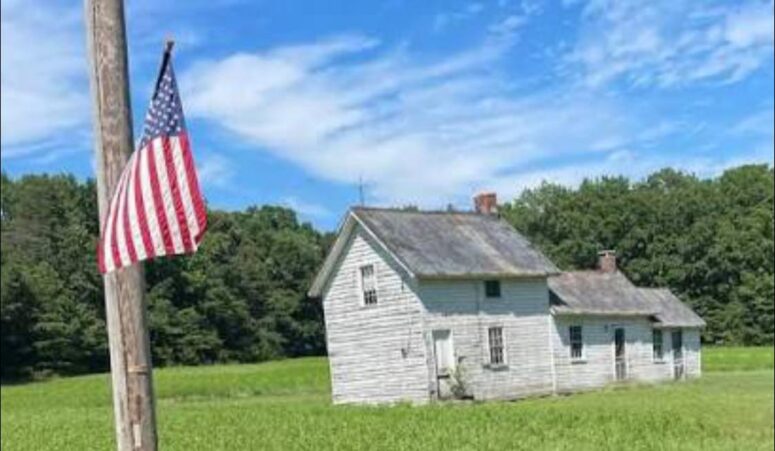
 After standing as a familiar landmark and conversation piece along Bull Road for generations, the historic Three Bears House was demolished earlier this month, closing a long chapter in St. Mary’s County’s rural architectural heritage.
The distinctive wood-framed home, known for its unusual “telescoping” construction, featured a larger main section with two smaller additions attached in descending order — a style often seen in early tenant houses on Southern farms. The structure drew attention from drivers, cyclists, and local history enthusiasts who appreciated its charm and rustic character.
Over the decades, the house bore witness to the evolving rhythms of rural life. Early occupants endured no electricity or indoor plumbing, hauling water from a well and heating the modest rooms with oil heaters. Longtime resident Mary Russell Dryden fondly recalled life in the house during the 1960s through the late 1990s — sharing memories of bathtubs warmed on a stove, thick plastic insulating windows in winter, and the constant ritual of emptying the “slop jar.”
But time took its toll. Years of weather, wear, and neglect left the house in a state of advanced deterioration — plaster crumbling, floors weakened, and wood succumbing to rot and insect damage. In later years, a family of turkey vultures even made the structure their home, adding to its eerie reputation. Despite interest from locals, the property’s last owner, Mary Cusk, who tended the grounds well into her later years, declined preservation offers, stating simply: “Leave it as it is. When it falls, it falls.”
With the demolition earlier this month, the iconic silhouette that once captured the curiosity of passersby is now gone, leaving behind only memories and photographs. For decades, the Three Bears House stood as more than just an old building — it was a visual link to the county’s rural past, a reminder of simpler times when families made do with what they had and neighbors shared stories over front-porch fences.
Residents say they will miss seeing the house along Bull Road — a quirky, humble testament to the area’s history that served as both a landmark and a touchstone for local identity. Though the structure has been removed, its legacy lives on in the recollections of those who knew it and the generations who paused to wonder about its origins as they passed by.