
When Clutter Becomes a Life Safety Emergency: Understanding Hoarding, Fire Risk, and Getting Help
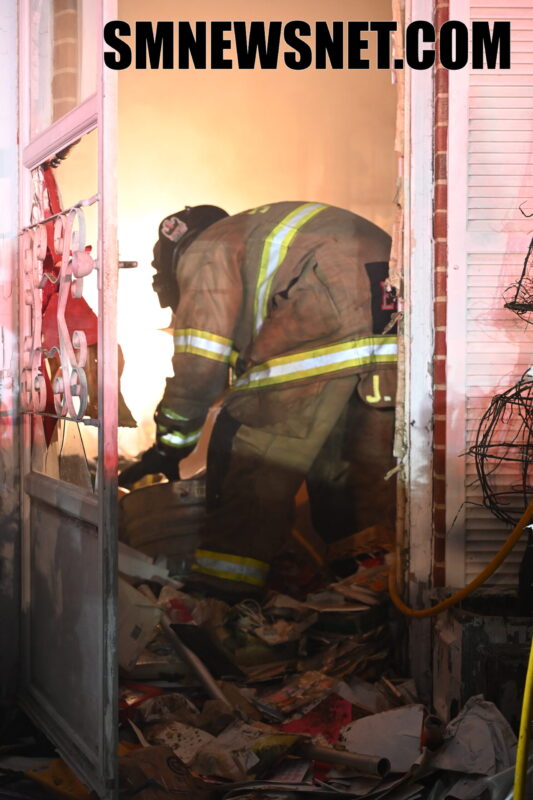 Several recent fires in St. Mary’s County have involved severe hoarding conditions, including incidents in Leonardtown, Mechanicsville, and Scotland, as well as a fatal fire earlier this year. In those cases, cluttered interiors slowed access, delayed firefighting operations, and created more dangerous conditions for both residents and First Responders.
Hoarding is not simply a housekeeping issue. It is a recognized mental health condition that involves persistent difficulty discarding possessions, even when the accumulation makes a home unsafe or no longer fully usable. Experts estimate that hoarding disorder affects approximately 2–3% of the population, with higher rates among older adults. The condition often becomes more severe over time without support or treatment.
This becomes especially dangerous when fire is involved. Excess belongings can block doors, hallways, and windows, limiting escape routes and trapping occupants inside. Heavy clutter increases the amount of fuel available to a fire, allowing it to grow faster and burn hotter. It can also hide fire extension within walls or beneath piles of materials, making it more difficult for firefighters to locate and extinguish the fire.
For firefighters, hoarding conditions significantly change how emergencies are handled. Search operations become slower and more hazardous as crews must navigate narrow pathways, unstable piles, and blocked rooms. These conditions can delay locating victims who may be trapped inside. Clutter can conceal structural hazards such as weakened floors, increasing the risk of injury to responders. Fires in hoarded homes often require more personnel, more equipment, and more time to safely bring under control.
National data highlights the seriousness of this issue. While hoarding-related fires represent a relatively small percentage of total residential fires, they account for a disproportionately high number of fire-related deaths. In one study, hoarding fires were linked to nearly a quarter of preventable residential fire fatalities.
Additional national data shows thousands of clutter-related fires over recent years, resulting in over a thousand injuries to both civilians and firefighters, as well as hundreds of millions of dollars in property loss.
Hoarding conditions also impact emergency medical services. Even without a fire, EMS crews may face significant challenges when responding to homes with excessive clutter.
On Friday, February 20, 2026, Mechanicsville Volunteers arrived on the scene of a reported house on fire with the homeowner trapped inside. When crews attempted to enter the home, they found extreme hoarding conditions which severely hampered search and rescue efforts. The 69-year-old homeowner sadly succumbed to the fire.
On March 11th, 2026, Leonardtown Volunteers responded to a reported house on fire with possible entrapment, upon arrival crews found a fire inside the home which had extreme levels of hoarding that not only posed a serious danger to firefighters due to multiple windows, doorways, and exits being completely unreachable and blocked, but hampered fire extinguishment efforts severely and resulted in hot spots and fire to spread for the majority of the incident. Crews operated on the scene for over 2 hours.
Just days later, March 13th, 2026, Mechanicsville Volunteers again responded to a reported working structure fire and arrived to find fire showing, when making entry into the residence, crews found hoarding conditions which hampered firefighting efforts.
On March 25th, 2026, firefighters in St. Mary’s County faced two fire incidents that contained hoarding conditions that imposed difficulties for firefighters to either accessing the residence and seat of the fire, or maneuvering the tight spaces it caused.
The fire in Scotland resulted in two pets dead, and two teens suffering serious injuries which required both victims to be flown by Maryland State Police Aviation to a burn center.
The second fire occurred in a motel in Lexington Park which resulted in the death of one cat.
In March of 2025, State Fire Marshal Brian S. Geraci stated the following, and with the recent tragedies and fatal incidents across Maryland, it can be repeated.
Geraci said “Within the first three months of the new year, we’re seeing an uptick in tragedies associated with home fires across Maryland, we need families to be aware of the fire hazards in their homes and put into practice, some straightforward safety tips. First and foremost, test your smoke alarms; this single device is the most effective tool in preventing injury or death.
Make a plan. Please come together as a family and make a home escape plan so you all know what to do in an emergency. Please move to your family’s safe spot when the smoke and CO alarms sound. Remember to get out and stay out and dial 911 from a safe location.”